Choose One Architecture
A standard AC fan, a 3-in-1 fan and a solar or rechargeable fan are different procurement programs. They cannot share one undefined quotation baseline.
OEM electric fan manufacturer for importers and private-label brands
Direct answer: Yaoyuan Electric's OEM electric fan manufacturing program is for wholesale importers, distributors and private-label brands that must control one market version from sample and artwork approval through packing, inspection and repeat orders. MOQ starts from 1000 PCS; retail and one-piece orders are not accepted.
Intent boundary: Use this page for OEM and private-label manufacturing-program searches. Use Electric Fan Factory Verification for supplier identity and manufacturer qualification, the fan proof hub for detailed inspection, packing and shipment evidence, and the fan catalog for model discovery.
Commercial Baseline
A standard AC fan, a 3-in-1 fan and a solar or rechargeable fan are different procurement programs. They cannot share one undefined quotation baseline.
Send the target port-arrival and on-shelf dates. The production, inspection and shipment plan must be checked against the selling season before an order is confirmed.
Country, voltage, plug, cord, speed control, motor direction, fan size, packing level and manual language belong in the approved version record.
Wholesale only. MOQ starts from 1000 PCS. Final feasibility depends on the selected catalog route, configuration, packing and order composition.
Recommended Models
Electric Fans

Electric Fans
Electric Fans
Electric Fans

Electric Fans
Program Routes
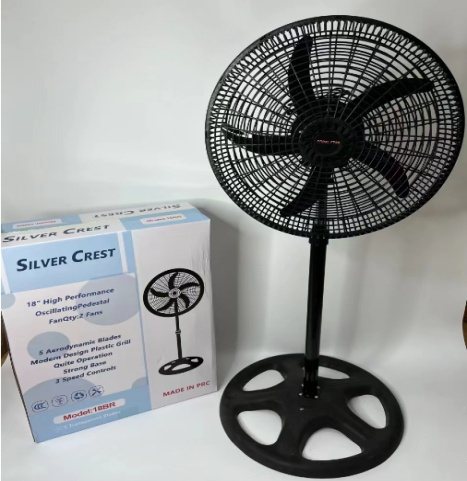
Use this route when the commercial priority is a familiar seasonal fan line with a defined fan size, motor direction, speed control, base, guard, blade, plug and carton. Compare the 18-inch wholesale route with the current 18BR catalog record. The final version still requires written specification and sample approval.
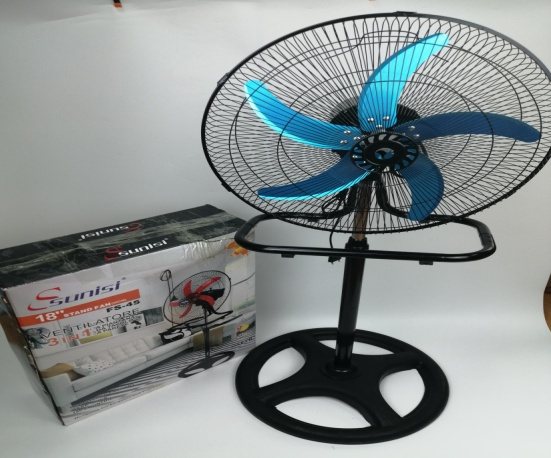
This route combines multiple installation or use positions, which increases the importance of accessory completeness, assembly instructions, pole and bracket fit, stability and carton organization. Review the 3-in-1 buying route and the P55 catalog direction before defining the packing list.
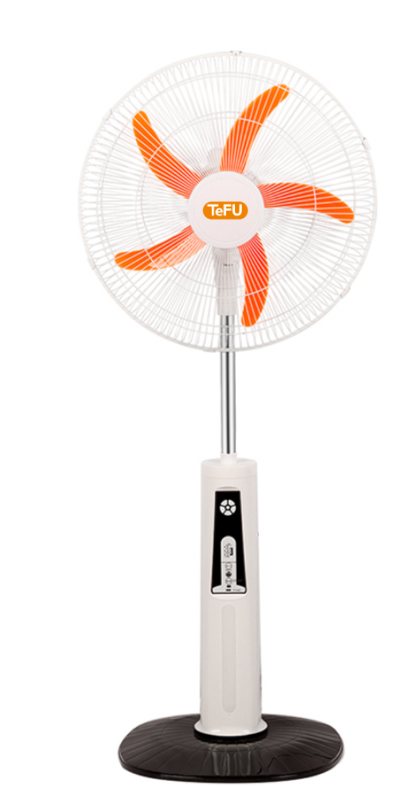
This route adds battery capacity, charging input, charger or cable, operating-mode claims, battery traceability, service parts and transport evidence to the approval record. Use the rechargeable fan buyer guide and the solar versus rechargeable decision guide; do not carry one version's battery claims into another version.
This route must define the fan, battery system, panel, cable, charging interfaces and included accessories as one approved package. Start with the solar fan wholesale route, then compare the P62 and P66 catalog directions. Panel or battery evidence must match the selected package.
Destination-version handoff
An OEM logo does not create a finished market version. After choosing the fan architecture, route the project through the destination page that controls electrical construction, artwork language, importer responsibilities, seasonal timing, packing and inspection. These routes organize buyer decisions; they do not certify an unreviewed fan or guarantee market access.
Name the importing country and selling season before approving voltage, frequency, plug, Spanish or Portuguese files, carton data and arrival planning. Latin America is not one electrical, language or market-access version.
Keep the proposed 120V/60Hz motor, plug, cord, guard, controls, English files, buyer-defined CPSC or FCC scope and batch inspection tied to the same approved construction.
Confirm the destination country, exact electrical and mechanical version, applicable Ecodesign and technical-file scope, operator information, language set, packing data and traceability before release.
For Great Britain, Northern Ireland or another European destination, identify the exact market in the RFQ instead of assuming that the EU route applies unchanged.
OEM Execution System
A buyer should be able to trace every approved decision from the original request to the repeat order. The following gates separate commercial assumptions from confirmed product facts and prevent a logo approval from being mistaken for complete product approval.
Start with one catalog route and one channel role. A standard 18-inch AC fan may suit broad distributor coverage, while a 3-in-1 direction may serve buyers who need pedestal, wall and table use from one package. Solar and rechargeable routes add battery, charging and transport decisions. Record the buyer channel, intended retail position and required assortment before comparing unit quotations.
Use the fan model selection matrix to compare route differences. A catalog page without a confirmed model code remains a configuration direction, not a final production identity.
Electric fan demand is time-sensitive. The project brief should state target port arrival and target on-shelf dates, not only an order date. The buyer and supplier can then work backward through destination clearance allowance, ocean transit, origin handling, inspection, packing and production. A quotation is commercially incomplete when it cannot be compared with the selling window.
Review the fan import timing guide, then connect the chosen market to the relevant regional season page. Timelines remain planning estimates until the exact order, route and booking are confirmed.
The approved specification should identify AC, rechargeable or solar architecture; voltage and frequency; plug and cord; control method; fan size; speed settings; motor direction; and included charging or solar accessories where applicable. Rechargeable and solar models also require battery-system and transport-document review for the selected configuration.
Use the plug and voltage control guide, the motor and component specification guide and the battery transport handoff guide. Compliance evidence is model- and market-specific and must be checked against the final production version.
A fan sample is not approved by appearance alone. The review record should cover blade and guard fit, base and pole stability, oscillation, tilt or height adjustment where applicable, control operation, noise, vibration and airflow behavior. Acceptance methods and comparison conditions should be written before production so the sample and shipment are judged by the same baseline.
Link the approval to the guard, blade and stability checks and the noise, vibration and airflow inspection guide.
Logo position, rating label, manual language, color box, barcode, carton mark and accessory list should be approved as named revisions. Carton dimensions, gross weight and container-loading estimates must follow the approved packing route. Catalog loading figures are planning references until final packing data is confirmed.
Use the OEM fan packing and carton-mark guide, the transit-damage control guide and the container-volume planning guide.
The production record should connect the purchase order, approved specification, artwork revisions and sample identity to the batch. Before shipment, the buyer should confirm the inspection scope, sampling method, packaging checks, functional checks and treatment of nonconformities. Photos or video are supporting evidence; they do not replace a written inspection result.
Use the production progress and batch traceability guide together with the pre-shipment sampling guide.
A repeat order should reference the previously approved version and list every requested or supplier-proposed change. Motor, capacitor, PCB, switch, plug, cord, blade, guard, battery, charger, solar panel, printed materials and carton structure should not change silently. Spare-part planning should follow the installed product base and the buyer's service method.
Use the fan spare-parts control guide and the component change approval system before confirming a reorder.
The linked pages show available catalog directions and recorded fields. Missing model codes or fields must be confirmed against the current configuration before they enter a quotation.
Workshop, shipment and customer-visit media support supplier verification. They do not prove that every shown component, certificate or process applies to every model.
Certificate and test-document scope must match the exact model, electrical version, brand role and destination requirement. No page represents universal certification.
Price, production timing, loading quantity and delivery terms become order facts only after the final specification, packing, quantity and trade terms are confirmed.
Two fan quotations are not comparable when one uses a standard AC motor and neutral carton while another includes rechargeable components, branded packing or a different accessory set. Before choosing a supplier, place each quotation beside the same catalog route, power architecture, plug and voltage, approved packing dimensions, inspection scope, spare-part expectation and target arrival date.
Use the fan cost-driver guide to identify what changed, the landed-cost calculation guide to connect product and logistics cost, and the quotation comparison sheet to keep exclusions visible. Price should be evaluated together with the configuration and responsibility boundary that produced it.
A useful comparison also records what happens after approval: who retains the golden sample, how a component substitution is reported, which spare parts are available, how packaging revisions are numbered and which date controls the seasonal plan. These fields turn a short price list into a procurement record that can support inspection, claim analysis and the next purchase order.
General order-journey evidence helps buyers understand the control sequence, but it does not prove the selected fan model, current batch, inspection acceptance, shipment release or delivery plan.
MOQ starts from 1000 PCS. Wholesale only. We do not accept retail or one-piece orders.
Wholesale Only · MOQ 1000 PCS
Include the model route, quantity, market, sales channel, target arrival date, power architecture, plug, voltage, branding, packing, destination port and inspection request.
Choose AC, rechargeable, solar or 3-in-1 direction before comparing the quotation.
Share the target arrival and on-shelf dates so the order can be planned backward from the selling window.
Production should follow the approved specification, sample and artwork revisions, not an informal chat summary.