Qualified Buyer Profile
The buyer defines the target channel, category roles, intended quantity by SKU and inventory limit. The supplier can coordinate evidence and packing data but cannot invent local sell-through or a profitable assortment.
Multi-category load planning
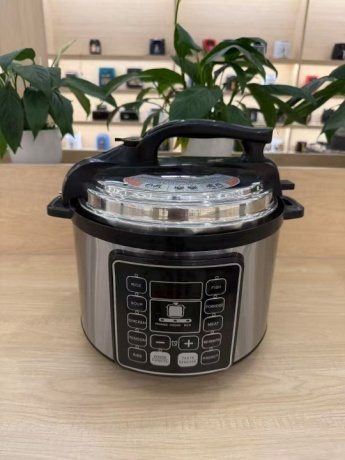
Coordinate approved rice cooker and companion-appliance SKUs through one carton, CBM, weight and landed-cost workbook. A full container does not override MOQ or model approval.
Wholesale only. MOQ starts from 1000 PCS per selected model unless a dated quotation says otherwise. Send current carton data for every approved SKU.
Buyer decision points
The buyer defines the target channel, category roles, intended quantity by SKU and inventory limit. The supplier can coordinate evidence and packing data but cannot invent local sell-through or a profitable assortment.
Check MOQ and production eligibility per exact model before allocating container space. A full container does not automatically reduce the MOQ of every included rice cooker or appliance SKU.
Use current units per carton, carton length, width, height, gross weight and net weight. Catalog unit dimensions or estimated loading numbers are not a substitute for approved packing data.
Release a private RFQ only after SKU quantities, packing revisions, loading basis, destination port, trade term, inspection scope and landed-cost inputs are aligned.
Container workbook
The workbook should preserve the source and revision of every number so the buyer can update freight or quantities without confusing product identity.
Record category, exact model, approved version, units ordered, units per carton and total cartons. Separate colors, plugs, languages or artwork revisions when they create different buyer SKUs.
Calculate CBM from current master-carton length x width x height x carton count, using consistent units. Keep the supplier's packing revision and measurement date beside the result.
Record gross and net weight, handling limits, fragile or orientation requirements and any stacking restriction. Volume alone cannot confirm an executable load plan.
Attach unit quotation, packing cost basis, inspection scope, inland movement, trade term, destination port and buyer-supplied freight inputs. Freight and local charges must remain dated variables.
Load-plan release
Choose exact rice cooker and companion-appliance records from buyer demand evidence; do not add an unknown SKU only to fill space.
Check whether each quantity can be produced, packed and inspected as one controlled version.
Use approved packing dimensions, carton quantity and weight rather than product-size estimates.
Compare carton CBM, weight, handling and container constraints, then keep a documented allowance instead of declaring a guaranteed maximum.
Allocate product, packing, inspection, inland, freight and destination inputs by the buyer's chosen method and date.
Tie the final SKU table to the quotation, packing list, loading evidence and receiving check so shortages or substitutions are visible.
Exception register
An exception register prevents an informal message from silently changing the approved load plan. Each change should identify the affected SKU, evidence owner, commercial effect and buyer decision.
If a model cannot meet the proposed quantity, record the supplier response, revised quantity, added cartons, cost effect and buyer approval. Do not spread the difference across other SKUs without recalculating the workbook.
When the color box, protection, units per carton or master-carton dimensions change, replace the old carton row, date the new source file and recalculate CBM, weight and freight allocation.
If the executed carton count differs from the provisional plan, preserve the final loading list and evidence. Reconcile shipped quantity, remaining balance and receiving expectation instead of treating the preliminary maximum as guaranteed.
A different model, color, plug, artwork or component revision requires explicit buyer review. Do not use similar appearance or shared headline specifications as permission to substitute one buyer SKU for another.
Wholesale planning
A mixed container can spread shipment-level costs across several appliance categories, but it also increases model, artwork, carton and inspection coordination. The plan is commercially useful only when every included SKU has a defined buyer role and an order quantity that can actually be produced.
Container utilization is not calculated from product photos or unit dimensions. It requires the approved master-carton revision, units per carton, carton dimensions, carton count, packed weight, handling constraints and a practical loading allowance. Final loading remains subject to current packing and execution conditions.
The supplier can consolidate communication, collect carton evidence and coordinate a loading plan. The buyer still owns destination freight, local charges, taxes, inventory risk and sell-through assumptions. Both parties should update the same workbook when a model, quantity, carton or route changes.
Buyer company, destination, category list, exact models, quantity by SKU, approved packing revision, carton quantity and dimensions, packed weight, plug, artwork, port, trade term and inspection scope.
Contact on WhatsAppRelated sourcing pages
Use current carton dimensions, quantity and weight to create a freight-ready calculation instead of estimating from product size.
Connect the approved SKU table to packing lists, loading checks and receiving reconciliation.
Coordinate air fryers, blenders, fans, pumps and rice cookers without merging their model approvals or MOQ rules.
Review category allocation, supplier evidence and quotation inputs before turning a load concept into an order.