Supplier identity
Match the legal company name, official domain, sales contact, commercial documents and beneficiary details.
Evidence Before a Bulk Appliance Order
Use one connected route to verify the company, exact model, approved sample, PCB version, compliance documents, production, inspection, packing and shipment before releasing a wholesale order.
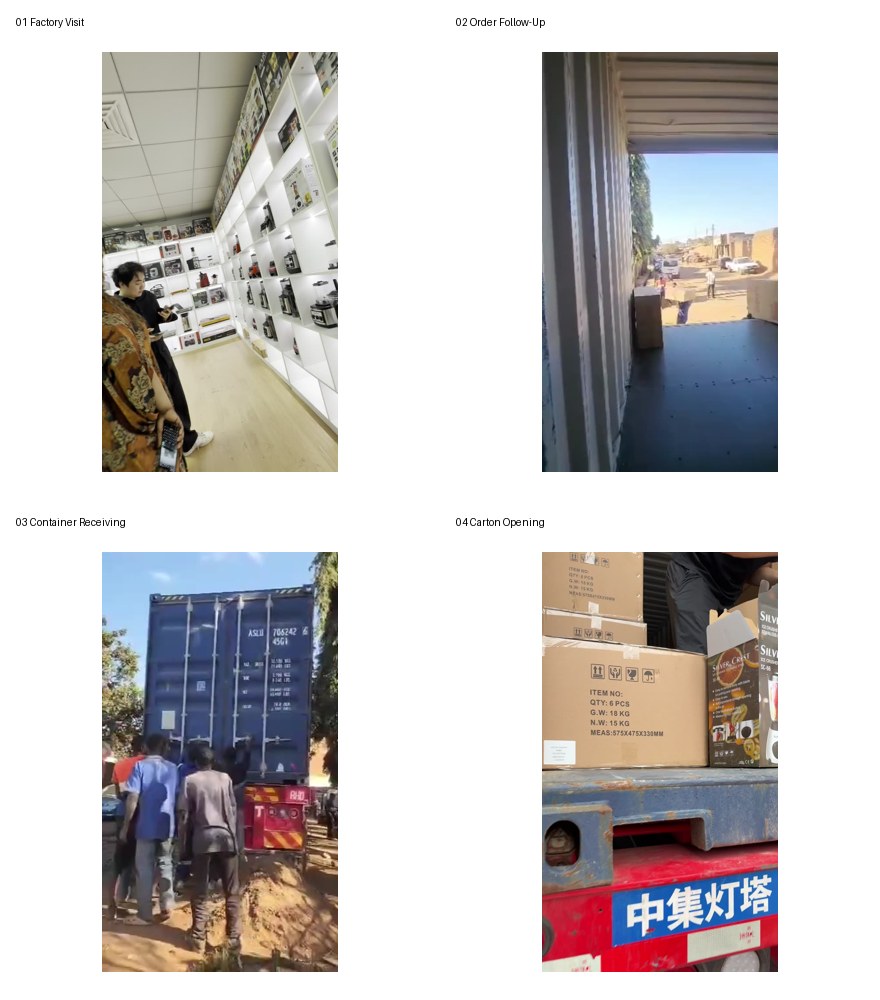
Direct buyer answer
Match the legal company name, official domain, sales contact, commercial documents and beneficiary details.
Connect the model code, appearance, electrical version, accessories, sample and written specification.
Keep the approved sample, PCB or component version, artwork, packing and inspection basis under change control.
Confirm quantities, carton data, inspection evidence, shipping documents and the authorized release decision.
Evidence request builder
Select assembly, packing, metal-press, PCB or production progress. The builder returns the fields needed to request model- and order-matched records without treating public footage as a passed result.
Controlled blank request
The selector does not store or transmit company names, contact details, order references or files. Buyer information is saved only after consent and submission on the verification form.
A factory video, certificate cabinet, catalog image or sample can support supplier due diligence, but none of them automatically proves the construction of every product. The buyer should connect each claim to the exact model, electrical version, packing route and production batch. The purpose of an evidence pack is not to collect more files. It is to make the commercial order, approved product and shipment describe the same goods.
Use legal identity, official contacts, premises and visible process context to verify who the buyer is dealing with. This level does not prove an exact model, order allocation or future production result.
Connect the exact model and electrical version to the approved sample, written specification, BOM or PCB revision, applicable document scope, functions, accessories and packing route.
Connect the PO, SKU, released revision, batch, quantity, dated milestone, selected sample, result, exception and release authority to the goods being produced and shipped.
Use workshop video to identify the questions that need order-matched records. Metal press footage can show visible press equipment and workshop context, but it does not establish the metal grade, thickness, tool identity, component revision or order allocation for an unlisted SKU. It is not evidence of an injection-molding process. Assembly and function-check footage can show visible parts, stations, control-panel actions or test equipment, but a powered display or meter reading does not prove formal safety, compliance, a passed result or batch release. Packing footage can show protection, retail boxes, master cartons and staging, but stacked cartons do not prove current inventory, completed quantity, inspection acceptance or readiness to ship.
For each requested clip or image, identify the PO, exact SKU and revision, batch, filming date, production stage, quantity or sample scope, test method and limits where relevant, recorded result, exceptions and responsible approval authority. Keep general factory footage as supplier-level process context until those order identifiers are supplied.
Start by confirming who receives the inquiry and who issues the commercial documents. Match the legal company name, official website, sales email and WhatsApp contact. Before payment, verify that the beneficiary and proforma invoice belong to the approved transaction route. Social media profiles and marketplace pages are secondary references; order-specific written documents control the transaction.
The public catalog helps buyers compare categories and model directions. The order version should then identify the selected model, color, capacity, rated power, voltage, frequency, plug, accessories, materials and functions. A physical or clearly identified sample should be linked to the written specification. If the buyer approves an OEM logo or color box, the current artwork revision and packing construction should be part of the same approval record.
For digitally controlled appliances, the PCB may affect user functions, display behavior, sensors, protection logic and approved electrical construction. Workshop footage can show visible PCB-process context at the filming time; it does not establish the exact board revision, method, result, capacity or acceptance status. The buyer still needs the board revision, critical component route, firmware or functional reference, approved sample and test basis for the exact appliance. Any substitution that affects the approved version should require written review.
A displayed certificate supports company and document due diligence, but certification coverage is model-specific. Check the applicant or manufacturer, model list, construction, electrical rating, standard, report or certificate number, date and target market. A similar product, brand logo or category name is not enough. If the ordered construction changes, confirm whether the evidence remains applicable.
After order release, use milestone evidence to confirm that the approved requirements reached production. Before shipment, identify the production lot, inspection timing, sample selection, product checks, packing checks and quantity reconciliation. Carton dimensions, gross weight, net weight and loading data should match freight planning. The final release should be based on the agreed evidence, not on a generic factory image.
Supplier-level records identify the legal entity and visible process context. Model-level records connect the exact construction, sample, specification and applicable documents. Order-level records connect the PO, SKU, revision, batch, quantity, checkpoints, results, exceptions and release decision.
No. General footage shows a process, station or visible activity at the filming time. The buyer still needs the exact model, approved sample, specification, BOM or component revision and order-matched record.
Identify the PO, exact SKU and revision, batch, filming date, stage, quantity or sample scope and responsible authority. Add material, thickness and tool or die references for formed parts; add the written method, limits, equipment, result and exceptions for function checks.
No. Verify the document type, issuer, applicant or manufacturer, model list, construction, electrical ratings, standard, status, date and destination-market relevance against the exact ordered version.
No. Reconcile the exact SKU quantities, packed, held, reworked and rejected status, inspection release, final packing list, loading tally and shipment identity. A visible stack is process context only.
Tell us your company, buyer type, country, product or model, quantity, voltage and plug, OEM packing request, destination port and the evidence required by your market or inspection process. MOQ starts from 1000 PCS. Retail and one-piece orders are not accepted. We will confirm what can be provided for the selected model and order stage instead of promising generic evidence for every product.